Esta increíble escultura hecha con espejos, a pesar de ser costosa, interesante y sin contar el haber sacrificado, cortado y roto varios espejos, crea una interesante sensación visual de mimetización el ambiente, casi invisibilidad, como si fuera de el cazador de la película THE PREDATOR. La pueden ver en este ...
Esta increíble escultura hecha con espejos, a pesar de ser costosa, interesante y sin contar el haber sacrificado, cortado y roto varios espejos, crea una interesante sensación visual de mimetización el ambiente, casi invisibilidad, como si fuera de el cazador de la película THE PREDATOR.
La pueden ver en este link: https://fb.watch/lkzPM-mka2/
;-D
The hardness of any mineral is defined by the Mohs scale. Friedrich Mohs, was a German geologist and mineralogist, who devised a scale, which distinguish minerals on an ordinal scale based on a method of comparing hardness by testing which mineral can visibly scratch others. “Scratching” means creating non-elastic ...
The hardness of any mineral is defined by the Mohs scale. Friedrich Mohs, was a German geologist and mineralogist, who devised a scale, which distinguish minerals on an ordinal scale based on a method of comparing hardness by testing which mineral can visibly scratch others. “Scratching” means creating non-elastic dislocations visible to the naked eye. Frequently, materials that are lower on the Mohs scale can create microscopic, non-elastic dislocations on materials that have a higher Mohs number. To perform the scratch test, metallurgist uses sclerometer or Turner –sclerometer. Here is the list of
12 Hardest Mineral
in the World
.
I'm very sorry for not updating. For the last year I have been in and out of doctors offices and the hospital. I now believe you hit a certain age and your body simply starts to fall apart. Lol, I am ok for the time being. I hope that all ...
I'm very sorry for not updating. For the last year I have been in and out of doctors offices and the hospital. I now believe you hit a certain age and your body simply starts to fall apart. Lol, I am ok for the time being. I hope that all of you are doing well. As do I wish you peace, prosperity and happiness.
This is just a personal belief of mine and I feel the need to share. Please, if you also feel the need to express your opinion as well, please do so below in the comment section!
...
I want your opinions!
This is just a personal belief of mine and I feel the need to share. Please, if you also feel the need to express your opinion as well, please do so below in the comment section!
I look around every day at what we, as humans, do on a daily basis. We wake up in the morning, we go to work and then come back home to our loved ones afterwards. Some of us are inventors, some of us are in the field of customer service or retail, some of us work construction and some of us work in graphic design. All of those are examples of what we as humans live our lives doing.
But, to what's to gain? Yes, you're working to provide for either yourself or your family. But, does that job/career help to advance human life?
My point is this. I believe that there are jobs and careers that are beneficial to humanity and there are those that aren't actually needed.
I've always had the thought and inquiry as to why the exploration of space wasn't a larger priority to most. The exploration of space could open up countless doors that would help humanity advance. Why isn't the question of WHY or HOW we came into being a larger focus than who's company has the better office chairs?
This is one of my larger questions in life. The focus of the human race is not devoted towards the betterment of humanity or to improve life for the next generation. It's prioritized towards who's car is the fastest or who's diamond ring shines the brightest.
Hello David! I often find myself wondering the same things, and the conclusion I always come to is that most people are too overcome with animalist self interest. The truth is, we no longer need this degree of self interest to survive. We've held on to self interest and as ...
Hello David!
I often find myself wondering the same things, and the conclusion I always come to is that most people are too overcome with animalist self interest. The truth is, we no longer need this degree of self interest to survive. We've held on to self interest and as a consequence have fallen victim to a system that only values money. How much money can an individual make? How much money can a company make off of an employee?
People work hard to make more money than is necessary for survival, only to spend it on things that don't truly make them happy. This is the foundational principle of most "First World" societies of the current age.
Systematically, it's hard to combat. The only opportunity to overcome this system, in my opinion, is on the individual level. The more people you convince that piles of plastic and pop culture distractions are not the key to happiness, the closer we will be to a better world, both for individuals and humanity.
Самая свежая информация об Асгардии, а также новости о космосе и научных открытиях со всего мира регулярно публикуются на официальных площадках в социальных сетях:
Самая свежая информация об Асгардии, а также новости о космосе и научных открытиях со всего мира регулярно публикуются на официальных площадках в социальных сетях:
На этом сайте есть русскоязычная ветка форума
https://asgardia.space/en/forum/forum/русский-187/
, где можно представиться в теме "Добро пожаловать в Асгардию!", прочитать важные новости на русском, найти перевод ответов на распространенные вопросы, задать свои вопросы и сделать предложения.
У меня вопрос по гражданству. У гражданства есть срок действия? У меня указан действителен до 10/20 (т.е. октябрь 2020). Означает пройдет всего год и я больше не являюсь гражданином Асгардии?
I will be running a facilitated discussion on
Poverty
on
Fri, Oct 12 @ 6:45pm
at our Yoga Studio which is just on the square here in
Baraboo
. Please share this to others who you think ...
I will be running a facilitated discussion on
Poverty
on
Fri, Oct 12 @ 6:45pm
at our Yoga Studio which is just on the square here in
Baraboo
. Please share this to others who you think might find this interesting. If you have any statistics or links that may be of interest for such a discussion I would appreciate that too.
This article examines some of the issues facing the regulation of individual criminality in outer space, both in respect of tourist activity near to Earth and the more problematic issue of how to regulate crews engaged in long duration, interplanetary exploration. It will be necessary to establish the current basis of criminal law in space, how such laws could be administered in the future and, ultimately, how punishment for transgressing crimes in outer space will be enforced.
It is significant that, when considering the human element of spaceflight, those responsible for the planning and implementation of missions have employed (and to some extent continue to employ) one central assumption: the basic compliance of the traveller with the internal discipline of the crew and the mission.
In September 2006, Anousheh Ansari captured headlines around the world as the first female private space explorer. Anousheh also earned a place in history as the fourth private explorer to visit space and the first astronaut of Iranian descent.
This assumption was undoubtedly based on the characteristics of the early space pioneers; test pilots, governed by a military code and painstakingly selected [4]. Even when the pool of astronauts was broadened to include scientists, the rigor of selection and the fierce competition for places ensured that mission planners could safely take the notion of crew compliance for granted, an assumption - the existence of an International Space Station Crew Code of Conduct (ISS CCoC) notwithstanding - that still permeates mission planning.
There has been little discussion on the way in which human behaviour should be regulated in outer space and what should happen when an individual commits a crime in space
With the anticipated expansion of the number of humans in space, this position, however, can no longer be taken for granted. Space tourism companies will seek to bring access to space to a wide range of people and, as can be seen from terrestrial air travel, such a wide pool of individuals will undoubtedly need some form of legal framework to ensure their behaviour can be regulated.
Whilst remaining the preserve of fewer participants, longer duration or interplanetary missions will require a space traveller very different from the ones currently recruited for human spaceflight. In either case, some form of criminal code may not only be desirable, it may be critical to the success of the mission - and the lives of all crew members.
Regulating space tourism
Whilst there have been isolated examples of super-rich space tourists, [5] the prospect of a viable tourist industry, taking members of the public on a return journey to low Earth orbit, safely, regularly and affordably has seemed tantalisingly close for most of the 21st Century.
Some form of criminal code may not only be desirable, it may be critical to the success of the mission - and the lives of all crew members
Recent setbacks, such as the loss of Virgin Galactic SpaceShipOne, have been offset by the progress made in other areas with both Virgin Galactic and Xcor both looking to begin test flights imminently [6]. As the prospect of space tourism giving greater access to LEO becomes a reality, there have already been attempts to address a number of key, as yet unsettled legal issues.
The Treaty on Principles Governing the Activities of States in the Exploration and Use of Outer Space including the Moon and Other Celestial Bodies, more commonly known as the Outer Space Treaty (OST), is the principal legal instrument that provides the context and operational authority for space agencies on a national and international level.
An instrument of international law, the OST has, to date, been ratified by over 100 members of the United Nations and provides the codified framework by which current activities in space are regulated [7]. Understandably, given the time it was written, the OST makes no mention of space tourists.
The OST affords protection to ‘astronauts’ as ‘envoys of mankind’. The subsequently drafted Rescue Agreement of 1968, however, eschews these rather grandiose concepts, and instead refers to occupants of the spacecraft as ‘personnel’ and omits reference entirely to the concept of envoys of mankind.
The first mention of criminality can be found in the Draft Convention on Manned Space Flight, [8,9] which used principles of liability and responsibility taken from the OST and the Rescue Agreement. Article III of the draft Convention gives jurisdiction in relation to a manned space object to the State of registry, while Article IV devolves responsibility for the spacecraft and all persons onboard to the commander. In turn, all members of the crew (including the commander) are answerable to the Director of Manned Space Flight Operations who is designated to be in charge. ‘By this measure, the draft Convention skillfully and unequivocally identifies the chain of command’. [10]
In addition to this, it has been identified that criminal conduct on aircraft and international air law can also provide a useful paradigm for future space law initiatives in respect of space tourism [11]. Criminal conduct on aircraft has, for understandable historical and political reasons, tended to focus on hijacking and terrorism. The Tokyo Convention of 1963 applies to offences and other acts prejudicial to good order and discipline on board an aircraft and gives considerable discretionary powers to the aircraft commander to prevent the commission of such acts and to disembark the person concerned. Jurisdiction for the prohibited acts rests with the state of registration of the aircraft.
The Tokyo Convention has been augmented with various other international treaties [12] and would seem to offer a ready-made solution to the regulation of space tourism. There are, however, difficulties with simply transposing this to space activity. The nature of sovereignty and the apportionment of liability in international space law is fundamentally different to that adopted in aviation law. Additionally, international conventions have been constructed exclusively with civil aviation and aircraft in mind. It is not a straightforward matter to simply amend the Convention to cover activities in outer space [13].
As well as the terrestrial backdrop of the Tokyo Convention and the proposed draft convention outlined above, the experience of managing astronauts during long duration visits to the International Space Station (ISS) may provide some guidance for managing humanity in space over the longer term.
China announced plans in 2013 for a proposed international space prison.A key area that is especially challenging is the
procedure that will lead to the investigation and
punishment
The ISS itself was established by means of an Intergovernmental Agreement (IGA) which contained Article 22 with specific provisions relating to crimes committed onboard the ISS. Unlike the Outer Space Treaty and the proposed Draft Convention mentioned above, the IGA uses the criminal law of the state of the nationality of individual astronauts.
Interplanetary spaceflight poses unique issues in respect of identifying and codifying criminality
Article 22 (1) states inter alia that the signatories to the IGA may exercise criminal jurisdiction over personnel in or on any flight element who are their respective nationals. This means that if a German were to commit a crime against an Italian astronaut in a module that was registered to Russia, then German criminal law would be engaged and Germany would have responsibility for criminal jurisdiction. Article 22 (2) then provides for the level of offence that will attract prosecution, involving misconduct on orbit that (a) affects the life or safety of a national of another Partner State or (b) occurs in or on, or causes damage to the flight element of another party.
As well as criminal liability, outlined in Article 22 of the IGA, there is also a separate code of conduct for the Space Station crew (ISS CCoC). Part I (B) defines the scope and content of the CCoC as being applicable to all ISS crewmembers from the time they are assigned to the crew by the competent astronaut management body [14]. This CCoC establishes a clear chain of command on-orbit, clear relationships between ground and on-orbit management, sets forth disciplinary regulations, and provides the ISS commander with appropriate authority and responsibility to enforce safety, security and crew rescue procedures. The CCoC, also outlines a disciplinary policy that binds the individual crewmember to a number of regulations that cover each stage of the mission.
The CCoC is supported by a number of individual policies in respect of ISS training, Earth to orbit transfer vehicle and ISS flight rules. Cooperating agencies recognise that their astronauts’ behaviour may be subject to a process that is administered not only on the basis of their own personnel policy but also of the rules developed by the ISS partnership [15]. This ‘sub-contracting’ of prosecutorial discretion to the state of the accused, in concert with a code of conduct for tourist behaviour bypasses the need for a detailed criminal code in space and provides an obvious route for managing any disciplinary issues amongst potentially unruly passengers. It also overcomes the significant political difficulties that adopting a ‘state of registry’ based system of criminal liability would undoubtedly encounter.
Space-based criminal justice
Having examined the issue of dealing with criminality amongst tourists in low Earth orbit (LEO), this discussion will now look longer term and consider the issues relating to managing crime on interplanetary travel.
Codes of conduct for space travellers may be appropriate for dealing with criminal activity amongst space tourists; interplanetary spaceflight, however, poses unique issues in respect of identifying and codifying criminality. Unlike the mass access to LEO eagerly anticipated by space tourism companies, the crew of any such flight will be relatively small for the foreseeable future.
Each individual member of the crew will serve a specific purpose and have a specific expertise [16]. Those charged with maintaining discipline in space will have a balancing act to make. As Redfield states ‘… there will be a minimal social order and the burden of determining what infractions do or don’t constitute a crime may fall on a group of individuals living and working in close proximity’. [17]
Upholding the laws of time and space - a traditional English police phone box has become an icon in the long running BBC sci-fi drama ‘Dr Who’.
A key area that is especially challenging is the procedure that will lead to the investigation and punishment of crime and how these systems will be administered on an interplanetary space mission.
‘It is the ‘prospect of punishment which differentiates criminal proceedings from other state-sponsored proceedings’. [18] This, however, brings the first definitional obstacle when considering the administration of justice in outer space; who should be assigned as the investigatory authority and who should administer any resulting punishment?
Whilst popular science fiction tends to give unlimited authority to the mission commander, this is problematic for two reasons. The first is cultural; the omnipotent commander approach tends to indicate a military structure with attendant codes of discipline. The experiences of the ISS would suggest a deliberate attempt to emphasise the civilian, peaceful nature of space exploration.
The second, more problematic reason is that by having the investigative function and judicial authority exercised by the same individual would clearly be contrary to the separation of powers [19] principle that operates within classical constitutional theory [20]. Given the limited distances that humans can currently travel, it may be that an approach similar to that which has been suggested in the Draft Convention on manned spaceflight seems the most appropriate way to overcome this, with the mission commander having authority ‘on the spot’ whilst still being accountable to the overall Mission Director on Earth.
Irrespective of who is granted responsibility to investigate and adjudicate on criminal infractions by crewmembers, there is a second element of punishment to consider. Here, the key issue is that, ‘as well as general questions of jurisdiction there are also questions of how to treat a suspect before trial, and what, if any, punishment to administer while in space.’ [21]
The approach adopted in respect of the ISS and criminality may well be suitable to manage unruly space tourists
Punishment is, perhaps, the most problematic area of contemplation for the administration of justice on interplanetary missions and one where there are few obvious solutions [22]. Living space is likely to be at a premium on any interplanetary spacecraft for the foreseeable future. The nature of such a craft means that individual space travellers will already be confined in a general sense.[23]. It does not seem likely that provision for isolated detention facilities will be made, given that living space will be at a premium onboard interplanetary craft.
The principal tool of punishment (incarceration away from the main social group) would seem to be inappropriate and unworkable. In addition, such isolation may be impractical with the offender having duties vital to the success of the mission and key to the survival of the other crewmembers. Other punitive sanctions, such as financial penalties, may be appropriate but of limited utility on a mission that may take many years to complete [24].
It is recognised that there is only a remote prospect of criminal activity being a serious problem on interplanetary missions. Well-trained and carefully selected astronauts should share a ‘common professional discipline’ [25] that means criminality is likely to be restricted to the realms of the improbable.
If the approach adopted by the ISS is extended to other forms of space exploration, and the criminality of the astronaut is contingent upon her or his nationality, there will be a clear body of jurisprudence with significant areas of commonality regarding laws preventing offences against the person, murder, sexual offences and property transgressions [26].Notions of crime and punishment in respect of interplanetary missions can only partially be dealt with via existing legal and regulatory regimes. The unique human habitat of a spacecraft used for interplanetary space travel means inevitably that there would need to be fresh consideration of any crew code of conduct, even if the basic principles of liability remain. Establishing the need for a revivified regulatory regime, therefore, requires consideration of the broader space environment [27].
Escaping Earth’s pull
As has been seen from this discussion, the challenges of regulating crew behaviour differ depending upon the nature of the mission. With space tourism, the problem is managing a large number people with diverse temperaments, who are primarily looking to be in space for a short time for recreational purposes.
The approach adopted in respect of the ISS and criminality, or one modelled on the Tokyo Convention where the nationality of the craft is determinative of jurisdiction, may well be suitable to manage unruly space tourists. The administration of justice on long duration spaceflight and interplanetary missions is necessarily more complicated and could, if not addressed, have serious implications which impact upon the crew and ultimately the success of the mission.
Artist impression of Lynx spacecraft being developed by XCOR Aerospace, an American private spaceflight and rocket engine development company.
Employing a state-based approach to criminal justice on interplanetary missions is not as simple as adopting a state-based approach as undertaken on the ISS. The transit time from the ISS to the surface of the Earth is around three and a half hours and referring the problem back to Earth poses little in the way of difficulty.
Should a serious crime be committed on a long duration spaceflight, the approach suggested by the draft convention on manned spaceflight would provide more effective protection both for the crew and the rights of the miscreant. Whichever approach is adopted, it is suggested that the issue of criminality needs to be considered proactively as part of the planning stage of an interplanetary mission. Otherwise mission control and those onboard the ship will be forced reactively to consider how to deal with an event that could adversely affect the mission and even perhaps the lives of the crew.
Não tornem isso público de mais,Asgardia é um novo começo ,devemos saber selecionar as pessoas ,não fiquem comentando isso com todo mundo ,so para aqueles pessoas que realmente vocês acharem que podem acrescentar algo de importante para Asgardia!
Não tornem isso público de mais,Asgardia é um novo começo ,devemos saber selecionar as pessoas ,não fiquem comentando isso com todo mundo ,so para aqueles pessoas que realmente vocês acharem que podem acrescentar algo de importante para Asgardia!
Hi to all Asgardian English learners, I am a professional English teacher. Born in England, my mother is from the UK and father from the USA. I teach world standard English to all those who wish to communicate in an international context. I am interested in forming a group exclusively ...
Hi to all Asgardian English learners,
I am a professional English teacher. Born in England, my mother is from the UK and father from the USA. I teach world standard English to all those who wish to communicate in an international context.
I am interested in forming a group exclusively of Asgardians, where people of many different nations can speak about their common interests.
Membership of the group is free for the first month. You can contact me at my gmail address (rikkjprince).
Rikki J Prince
On this day June, 15, 2017, It becomes official. Life is officially moving in another direction. Life in space is possible and i'm going to be apart of it! Living inside of this crazy idea that maybe only 100 years ago people weren't even able to fathom this, but ...
On this day June, 15, 2017, It becomes official. Life is officially moving in another direction. Life in space is possible and i'm going to be apart of it! Living inside of this crazy idea that maybe only 100 years ago people weren't even able to fathom this, but yet here we are. Wow,... I'm an asgardian...,I am proud to call myself an Asgardian!
As a striving nation what kind of jobs are we supposed to have? Not everybody is well equipped or has the proper knowledge. Are there gonna be job specification classes or are there gonna be people struggling to get by?
I would assume that as senior government positions are filled then a cascade of support roles to those senior leaders. As legislation develops and additional roles are required for the specific duties (ie police to enforce laws and investigate criminal activities to be presented to the Asgardia Courts). As for ...
I would assume that as senior government positions are filled then a cascade of support roles to those senior leaders. As legislation develops and additional roles are required for the specific duties (ie police to enforce laws and investigate criminal activities to be presented to the Asgardia Courts).
As for private businesses there is nothing currently stopping anyone from establishing a business or offering their services as a freelancer.




 In September 2006, Anousheh Ansari captured headlines around the world as the first female private space explorer. Anousheh also earned a place in history as the fourth private explorer to visit space and the first astronaut of Iranian descent.
 China announced plans in 2013 for a proposed international space prison.A key area that is especially challenging is the
 Upholding the laws of time and space - a traditional English police phone box has become an icon in the long running BBC sci-fi drama ‘Dr Who’.
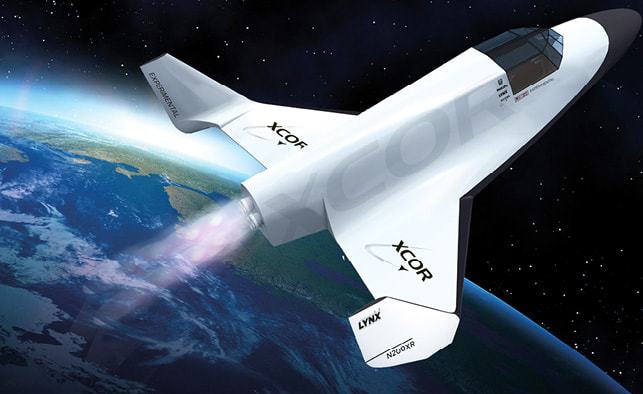 Artist impression of Lynx spacecraft being developed by XCOR Aerospace, an American private spaceflight and rocket engine development company.