A new country aimed at the advancement of mankind. Which is where the concept is better than any other country. Supposing this does exist, as always man always wants to realize something that is better, but will it be realized? It's hard to imagine. Short story feeding and drink ...
A new country aimed at the advancement of mankind. Which is where the concept is better than any other country. Supposing this does exist, as always man always wants to realize something that is better, but will it be realized? It's hard to imagine. Short story feeding and drink we take from where? From the earth? From which part of the earth? Still import? If not import then will a small country can optimize a thing the most basic needs of mankind?
I am glad to be an ambassador of Asgardia in Democratic republic of Ethiopia, and i would love to say we Asgardians, let us contribute our abilities and supports to done things fast.
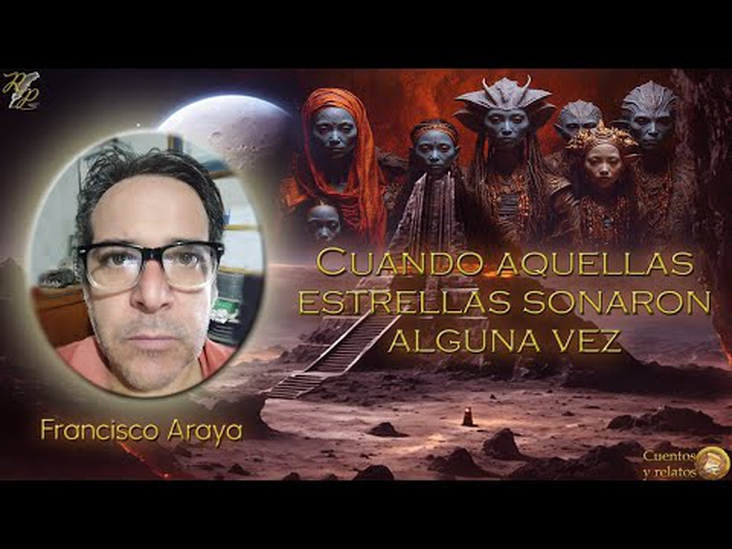
Esta vasta alianza intergaláctica, compuesta por seres de diversas formas y orígenes, fue un estandarte de paz, diversidad y cooperación. El Consejo había logrado maravillas tecnológicas, explorando mundos lejanos y creando lazos duraderos entre las especies. Ve y escucha esta apasionante historia
Sometimes the fact that I will likely never be able to reside in space kills me. I need to fight to get my body in better condition but even when improved my ailments will still exist, no changing that I'm afraid.
THE GM. JESÚS OTHÓN RODRÍGUEZ GARCÍA PRESIDENT OF PEKITI TIRSIA MEXICO, CONGRATULATES THE PRESIDENT N ° 46 OF THE USA JOSEPH ROBINETTE BIDEN JR. FOR HIS GREAT VICTORY AND CERTIFICATION OF THE CONGRESS OF USA AND AL MR. GRICHA RAETHER REPRESENTATIVE OF THE DEMOCRATIC PARTY FROM THE USA IN MEXICO. ...
THE GM. JESÚS OTHÓN RODRÍGUEZ GARCÍA
PRESIDENT
OF
PEKITI TIRSIA MEXICO, CONGRATULATES THE PRESIDENT
N ° 46
OF THE
USA
JOSEPH ROBINETTE BIDEN JR.
FOR HIS GREAT VICTORY
AND CERTIFICATION OF THE CONGRESS OF
USA
AND AL
MR. GRICHA RAETHER
REPRESENTATIVE
OF THE
DEMOCRATIC PARTY
FROM THE USA
IN MEXICO.
TO STRENGTHEN
DEMOCRACY
FROM USA
IN MEXICO.
GOD BLESS & PROTECT YOUR COUNTRY & YOUR NEXT PRESIDENT.
ANQUARIUS
MÉXICO CITY.
EL GM. JESÚS OTHÓN RODRÍGUEZ GARCÍA
PRESIDENTE DE PEKITI TIRSIA MEXICO,
FELICITA AL PRESIDENTE N° 46 DE LOS EE. UU.
JOSEPH ROBINETTE BIDEN JR.
POR SU GRAN VICTORÍA Y CERTIFICACIÓN DEL CONGRESO
DE LOS EE. UU.
Y AL
SR. GRICHA RAETHER REPRESENTANTE DEL PARTIDO DEMÓCRATA DE LOS EE. UU. EN MEXICO.
POR FORTALECER LA DEMOCRACIA DE EE. UU. EN MEXICO.
DIOS BENDIGA & PROTEJA A SU PAÍS
&
A SU PRÓXIMO PRESIDENTE.
7 AQUARIUS 0005
CIUDAD DE MEXICO..
Basswood's corruption, a journey through the memories of the mind and a battle with Sam's inner self. This is Twin Mirror (PS4): an enjoyable investigation game, made especially for gamers who like to think and try their hand at a classic literary "thriller" plot... Here you can find a review ...
Basswood's corruption, a journey through the memories of the mind and a battle with Sam's inner self. This is Twin Mirror (PS4): an enjoyable investigation game, made especially for gamers who like to think and try their hand at a classic literary "thriller" plot...
Here you can find a review of the game in italian language: - https://www.sentieriselvaggi.it/iniziopartita-twin-mirror-ps4-la-recensione/
Hope you will enjoy reading it.
It would eventually be named the Rentiniv Daisy, via several miscommunications and some typography errors. By the time things could be corrected, it was already too late. https://peakd.com/fiction/@internutter/challenge-02919-g362-pass-it-on
It would eventually be named the Rentiniv Daisy, via several miscommunications and some typography errors. By the time things could be corrected, it was already too late.
https://peakd.com/fiction/@internutter/challenge-02919-g362-pass-it-on
While aboard the International Space Station, astronaut and chemist Dr. Don Pettit conducted physics demos that are out of this world. From electric didgeridoos to microgravity goo, Don showed us what's possible when you're over 200 miles above the Earth.
...
While aboard the International Space Station, astronaut and chemist Dr. Don Pettit conducted physics demos that are out of this world. From electric didgeridoos to microgravity goo, Don showed us what's possible when you're over 200 miles above the Earth.
Astronaut and chemist Dr. Don Pettit does physics demos that are out of this world. Currently on board the International Space Station, Dr. Pettit presents fantastic physics that can only be demonstrated in micro-gravity.
Challenge Question:
In the end of the video, Dr. Pettit put a nylon knitting needle near the syringe used to squirt water droplets onto the Teflon knitting needle. Why did Dr. Pettit need a nylon needle near the injected drops and why must the other needle be Teflon?
Challenge Answer:
Teflon acquires electrons from other materials when rubbed, thus attaining a negative charge.Nylon gives up electrons to other materials when rubbed becoming positively charged.When the droplets come out of the syringe near the positively charged nylon needle they give up some electrons to it becoming positive themselves.This makes the water droplets more attracted to the negatively charged teflon needle because dissimilar charges attract.
Episode 2: Bistronauts
Challenge Question:
Why can't you use a regular cup in microgravity?
Challenge Answer:
Using a regular glass, water particles are attracted to the bottom, and sides of the cup. A small disturbance, such as taking a sip, would cause the liquid to separate from the glass. If the surface tension did not hold the water together, water would float around everywhere. With the "Space-Cup", the liquid will stay attached to the edges, and capillary action will keep the water connected when taking a drink.
Episode 3: Thin Film Physics
Challenge Question:
Why does the shape of the water sheet affect the direction of the Marangoni convection?
Challenge Answer:
Heat weakens surface tension, so water gets pulled away from the heat source. But to maintain the film, water has to replace it (or it breaks like at the end). So should the water move away along the edges, to be replaced by water from the center, or should it be the other way around? Water heats faster where it is thinner, so there's a preference to move away from the heat along the thinner water path. In the convex case, that's along the edge. In the concave case, that's toward the center.
Episode 4: Lenses and Vortices
Challenge Question:
How does the viscosity of the fluid influence a vortex?
Challenge Answer:
Higher the viscosity, lesser the vortex, as more viscos fluid is, greater is the molecular attraction, that`s why honey will have less vortex producing capacity than water
There's even more water on the moon than we previously thought, according to new analysis of tiny glass beads left over from ancient volcanic erup
tions.
The naturally occurring beads were collected in the 1970s as part of the Apollo 15 and 17 missions, which landed near zones of volcanic activity. The beads formed when magma bursting onto the surface crystallized in such a way that water became trapped inside.
In a
new study published today in
Nature Geoscience
, scientists reexamined the Apollo samples and used more recent satellite data to look for signs of water-bearing beads elsewhere on the moon. They found that the volcanic deposits are indeed widespread, which suggests that the material inside the moon is wetter than previously thought.
“The fact that they see this feature associated with the glasses tells us that there was indeed quite a bit of water in the interior of the moon when these volcanic eruptions were occurring,” says Anthony Colaprete, a NASA scientist who reviewed the paper
.
Here’s what we now know about water on the moon.
Scientists used to think the moon was completely devoid of water, but recent studies have proven that false.
HAS ANYONE FOUND WATER ON THE MOON BEFORE?
Yes, but only very recently. Scientists used to think the entire moon was bone-dry. But in 2008, researchers examined those glass beads from the Apollo samples and
found the first known trace amounts of water
.
From that point on, lunar water discoveries started gushing. In 2009, NASA crashed a rocket and a satellite into a crater on the moon’s south pole, in the hopes of picking up additional watery evidence. The crashes gave off
signatures associated with water ice and hydroxyl
—a highly reactive molecule associated with water.
HOW IS THIS STUDY DIFFERENT?
While we’ve mapped a good amount of the moon’s surface water, we don’t know for sure what the interior of the moon is like, in part because we have very few samples of volcanic rocks belched up from the lunar mantle.
For their study, Ralph Milliken of Brown University and Shuai Li at the University of Hawaii wanted to find out more about the amount of water inside the moon. (
See rare pictures of the moon captured by Apollo astronauts
.) The study is one of the first to try and answer this question using satellite mapping of volcanic debris called pyroclastic flows.
SO HOW MUCH WATER IS THERE?
Unfortunately, while this study suggests water is indeed more abundant inside the moon, it’s hard to know for sure how much exists.
Studies from 2011 revealed that the volcanic beads contained similar amounts of water as volcanic basalts on Earth. And deep within our planet, there is probably
more water
than all of the surface oceans, lakes, and rivers combined.
This map shows where the volcanic glass deposits are located on the surface of the moon.
WHAT DOES THIS MEAN FOR THE FUTURE?
Even though the glass beads contain only 0.05 percent water, the sheer amount of them presents a tantalizing opportunity for future moonwalkers. Water ice in deeply shadowed polar craters would be much harder to reach than the water-bearing volcanic rocks spread across the moon. That means lunar visitors could one day extract this water rather than having to bring their own supplies.
“This is actually very useful,” says Colaprete. “We can actually now have a better handle on these deposits as a potential lunar resource going forward and can be compared to future studies of polar resources.”