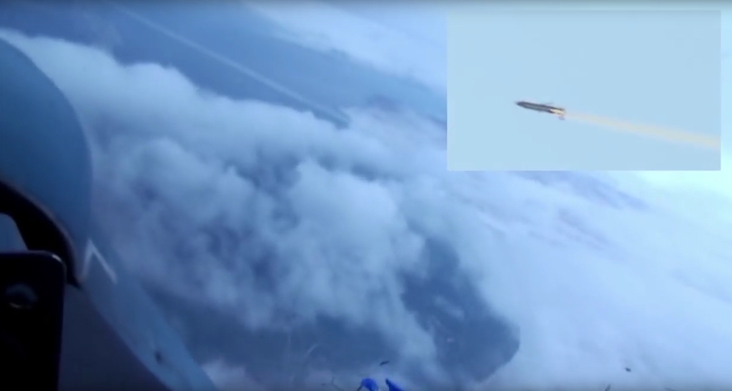
On October 21, Russia completed key tests of the Burevestnik unlimited-range cruise missile, a nuclear-powered missile. Russian President Vladimir Putin emphasized that this is a "unique" and unparalleled missile that the Eurasian country has been developing in recent years and is now working to put into combat service. Chief of ...
On October 21, Russia completed key tests of the Burevestnik unlimited-range cruise missile, a nuclear-powered missile. Russian President Vladimir Putin emphasized that this is a "unique" and unparalleled missile that the Eurasian country has been developing in recent years and is now working to put into combat service. Chief of the Russian General Staff Valery Gerasimov confirmed that during the October 21 test, the missile traveled a distance of 14,000 kilometers in a flight that lasted approximately 15 hours. "And this is not its limit," he emphasized.
What is there to know about this innovative and powerful Russian missile? The Burevestnik is capable of carrying both nuclear and conventional warheads. It was first unveiled by Putin in 2018. The development of the Burevestnik, which began in the early 2000s, was in response to the United States' withdrawal from the Anti-Ballistic Missile Treaty and the creation of a global missile defense system. Little is known about this missile's performance beyond its main advantage: its unlimited range, which, in theory, would allow it to strike at enemy strategic facilities and industrial centers anywhere in the world. Military experts believe the missile could conduct extended patrols in a designated waiting area, covering thousands of kilometers for weeks or even months, using its nuclear propulsion and awaiting cues. Expert Yuri Knutov maintains that the innovative weapon is a response to threats to deploy American Tomahawk cruise missiles on Ukrainian territory and is fully capable of reaching the United States.
"Our response to the [possible] deployment of Tomahawk missiles is precisely the Burevestnik missile, capable of reaching US territory and hitting the target that, in general, is intended for it. […] The missile flew 14,000 kilometers during the tests, but it has much greater potential. Well, I think it can fly 20,000 kilometers, and if 20,000 kilometers is half the equator, then it can practically hit its target from any direction, so to speak," he maintained. Nothing similar would appear in the world in the next 5 to 10 years, he predicted.
"Our response to the [possible] deployment of Tomahawk missiles is precisely the Burevestnik missile, capable of reaching US territory and hitting the target that, in general, is intended for it. […] The missile flew 14,000 kilometers during the tests, but it has much greater potential. Well, I think it can fly 20,000 kilometers, and if 20,000 kilometers is half the equator, then it can practically hit its target from any direction, so to speak," he maintained. Nothing similar would appear in the world in the next 5 to 10 years, he predicted.