Question to Grok: "What are the compatible points between the UN SDG's and Space Nation Asgardia?" ### Overview of Asgardia and the UN SDGs Asgardia, often called the "Space Nation," is a virtual, borderless micronation founded in 2016 by aerospace scientist Igor Ashurbeyli. Its core mission is to create a ...
Question to Grok: "What are the compatible points between the UN SDG's and Space Nation Asgardia?"
### Overview of Asgardia and the UN SDGs
Asgardia, often called the "Space Nation," is a virtual, borderless micronation founded in 2016 by aerospace scientist Igor Ashurbeyli. Its core mission is to create a democratic society in space, free from national restrictions, with goals including satellite launches, asteroid deflection, protection from solar flares, and establishing a permanent Moon base by 2043. It emphasizes global citizenship (with over 290,000 registered citizens as of 2019), scientific advancement, and UN recognition as a sovereign entity. The United Nations Sustainable Development Goals (SDGs), adopted in 2015, comprise 17 interconnected targets to address poverty, inequality, climate change, and more by 2030. While Asgardia does not explicitly map all its initiatives to the SDGs, its space-focused activities strongly align with several, particularly through space technologies that enable monitoring, innovation, and global cooperation. Notably, Asgardia actively advocates for an "18th SDG" on space accessibility, demonstrating direct engagement with the UN framework.
### Key Compatible Points
Asgardia's emphasis on open-access space exploration, data-driven science, and planetary protection complements the SDGs in the following ways:
1. **SDG 9: Industry, Innovation, and Infrastructure**
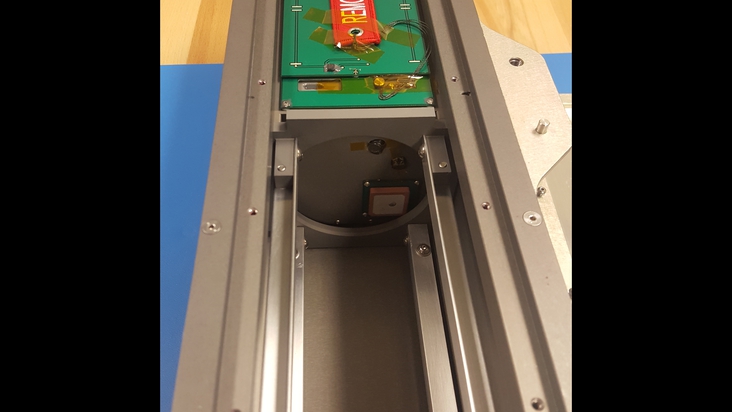
Asgardia's satellite projects, like the Asgardia-1 CubeSat launched in 2017 (which stored citizen-submitted data in orbit), promote resilient infrastructure and technological innovation. Space tech broadly supports this goal by enabling global connectivity, R&D in aerospace, and fostering inclusive industrialization—areas where Asgardia's orbital data storage and future colony plans contribute directly.
2. **SDG 13: Climate Action**
Asgardia's commitment to shielding Earth from asteroids and coronal mass ejections (CMEs) aligns with building resilience against natural disasters. Space technologies, including satellites for Earth observation, are critical for climate monitoring, early warning systems, and emissions tracking, helping accelerate SDG progress in energy transitions and disaster risk reduction. Asgardia's protective initiatives extend this to space weather threats, enhancing global climate security.
3. **SDG 15: Life on Land**
Through potential Earth observation capabilities from its satellites, Asgardia supports biodiversity monitoring and deforestation tracking—key to halting land degradation. Broader space applications, like remote sensing for ecosystem health, have mapped contributions to this SDG via projects that detect illegal logging or wildlife poaching, mirroring Asgardia's data-focused space missions.
4. **SDG 17: Partnerships for the Goals**
Asgardia's model of global citizenship and collaborations with agencies like NASA, ESA, and over 100 organizations in the Space 18th SDG Coalition embodies multi-stakeholder partnerships. It advocates for inclusive space governance, aligning with the SDG's call for strengthened global cooperation on technology transfer and capacity-building.
5. **SDG 4: Quality Education (Indirect Support)**
Asgardia's emphasis on science dissemination and public involvement in space projects (e.g., citizen photo uploads to satellites) fosters STEM education worldwide. Space tech aids this SDG by providing accessible data for learning about environmental issues, with Asgardia's virtual nation promoting lifelong learning in extraterrestrial contexts.
### Advocacy for an 18th SDG: "Space for All"
A standout compatibility is Asgardia's leadership in pushing for an 18th SDG, titled "Space for All: Civilian Space Development and Life Beyond Earth." In 2023–2024, Asgardia participated in UN panels and symposia, including the UN Summit of the Future, where its Minister of Culture Cheryl Gallagher advocated for this addition to make space a commons for sustainable development. This proposed goal would integrate civilian access to space tech, directly amplifying the existing SDGs by addressing off-Earth resources for poverty reduction, health, and innovation. Asgardia views it as essential for humanity's long-term survival, tying into its Moon base vision.
In summary, Asgardia's space-centric ethos enhances SDG implementation by leveraging technologies for observation, protection, and equity, while its UN advocacy bridges terrestrial goals with cosmic frontiers. For deeper dives, Asgardia's official site (asgardia.space) outlines ongoing projects.